How to quickly complete grooving processing in a machining center
Grooving is a relatively complex process. To do a good job in grooving, you must first understand the groove type. Common groove types include cylindrical grooves, inner hole grooves and end face grooves. Although the processing is difficult, grooving can be effectively completed with reasonable operation of the machining center. Before doing this, we need to have a clear understanding of the type of groove processing.
What is grooving? In fact, in all tool cutting, regardless of metal or non-metallic tool materials, regardless of the workpiece rotation or tool rotation processing method, as long as a grooved tool is used to cut a groove on the workpiece, it can be classified as cutting. Groove processing. It is easy to process cylindrical grooves. As shown in the figure below, the processing form of cylindrical groove cutting facilitates easy chip removal under the action of gravity and coolant. In addition, the entire process of cylindrical groove processing is visible to the operator, who can directly and relatively easily check the processing quality. But some potential obstacles in workpiece design or clamping must also be avoided.
For internal hole grooving, good processing results will be achieved when the tool tip position is slightly higher than the center line. Machining end face grooves is more special. The tool must be able to move in the axial direction, and the flank radius of the tool must match the radius to be machined. The processing effect is very suitable when the tip position of the end face grooving tool is slightly higher than the center line.
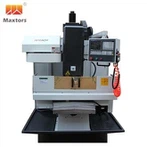
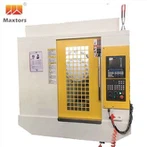
In any grooving process, the machine design and technical conditions of the machining center are also basic factors that need to be considered. The main performance requirements for the machining center include: sufficient processing power, a high-speed rotating spindle to ensure that the tool runs within the correct speed range, and no speed loss or vibration occurs; high enough rigidity to complete the required tasks During cutting, chatter will not cause damage to the surface finish of the workpiece; it has high enough coolant pressure and flow, and the functional design of the water outlet from the spindle center of the chip removal machining center can meet this processing requirement.
When performing large-volume grooving processing, you have to pay attention to the selection of cutting tools. Chenghai Machine Tool recommends using forming tools. Because the disadvantage of non-blade forming tools is that if one of the teeth is broken or worn faster than the other teeth, the entire tool must be replaced, which greatly reduces the processing efficiency and affects the processing accuracy. The forming tool can cut all or most of the groove shape in one grooving process, which can free up the tool position and shorten the processing cycle time.
In fact, grooving processing is not difficult in terms of program design and processing process. What is more complicated is the irregular shape of the workpiece and the subsequent continuous debugging. By applying the difference in processing methods to the reasonable selection of tools, grooving can be completed quickly.