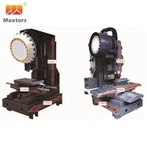
The transformation of ordinary machine tools into numerical control mainly involves the creative design of the original machine tool structure, so that the machine tools can reach a relatively ideal state. CNC lathe is a typical representative of mechatronics, and its mechanical structure has many similarities with ordinary machine tools. However, modern CNC machine tools are not simply equipped with CNC systems on traditional machine tools, nor are they simply partially improved on the basis of traditional machine tools (limited by funds and other conditions, and traditional machine tools are transformed). The tools are transformed into recommended CNC machine tools. is another matter). Traditional machine tools have weaknesses such as insufficient rigidity, poor vibration resistance, large thermal deformation, large frictional resistance on sliding surfaces, and gaps between transmission parts, which make it difficult to meet the requirements of CNC machine tools for machining accuracy and surface roughness. Quality, productivity and service life. Modern CNC technology, especially machining centers, has undergone major changes in the structure of its supporting components, main drive system, feed drive system, tool system, auxiliary functions, etc., as well as its overall layout and external shape, forming a unique mechanical structure. CNC machine tools. Therefore, in the process of CNC transformation of ordinary machine tools, various situations should be considered comprehensively, so that the performance indicators of ordinary machine tools can be as close as possible to CNC machine tools.
Another significant advantage of CNC technology is the flexibility it provides in the manufacturing process. With instant programming changes, manufacturers can quickly switch production from one product to another without significant downtime. CNC also provides the ability to process materials that are difficult or impossible to work with traditional methods.
The transformation of ordinary machine tools has also had a significant impact on the manufacturing industry's competitiveness in a global market. By increasing productivity and reducing production costs, manufacturers can compete better with international competitors, produce superior-quality products, and meet customer demands more efficiently.
Overall, converting conventional machines to CNC technology has significantly improved the manufacturing industry's efficiency, accuracy, and productivity. These benefits have led to lower production times and costs, greater flexibility, and improved product quality, making them an essential component to modern manufacturing operations.