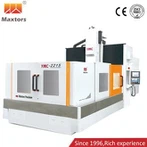
Machining centers are used in a variety of industries to manufacture metal parts with high levels of precision and accuracy. Within these machines, there are two types of rails that guide the movement of the cutting tool: linear and hard rails.
Linear rails are composed of a carriage and guide rail, with rolling bearings that enable smooth motion along the rail. These rails are widely used in modern machining centers due to their high levels of precision, speed, and durability. Linear rails are also relatively easy to maintain, as they can be cleaned and lubricated without the need for professional assistance.
Hard rails, on the other hand, are composed of two hardened steel surfaces which enable the movement of the cutting tool. The hardness of these rails provides excellent durability and precision, as the tool cannot easily cause wear and tear on the rail. Hard rails were the traditional form of rails used in machining centers, but have largely been superseded by linear rails due to their superior performance and ease of use.
The primary difference between linear and hard rails is the way in which they guide the cutting tool. Linear rails provide a smooth,
continuous motion that allows for high-speed cutting with minimal friction. Hard rails, however, provide a more rigid and stable base for the cutting tool, which can be helpful for some types of machining processes.
In addition, linear rails are generally easier to install and maintain compared to hard rails. They are less prone to damage from improper use or maintenance, and can often be replaced without requiring the entire machine to be taken apart.
Overall, both linear and hard rails are important components of modern machining centers, each with their own advantages and disadvantages. Ultimately, the choice between these two types of rails will depend on the specific requirements of the machining process, as well as the budget and maintenance capabilities of the manufacturer.