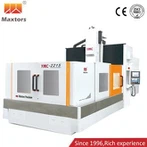
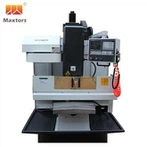
When the milling machine is working, the workpiece is mounted on the workbench or indexing head and other accessories, and the rotation of the milling cutter is the main movement, supplemented by the feed movement of the workbench or milling head, so that the workpiece can obtain the required processing surface.
What is the structure and commonly used types of milling cutters?
The structure of milling cutters is divided into 4 types:
Integral style: The blade body and blade teeth are made into one piece.
Integral welded tooth type: The cutter teeth are made of carbide or other wear-resistant tool materials and are brazed on the cutter body.
Insert tooth type: The cutter teeth are fastened to the cutter body by mechanical clamping. This replaceable cutter tooth can be a cutter head made of solid tool material or a cutter head made of welded tool material. Milling cutters with the cutter head mounted on the cutter body are called internal grinding types; milling cutters with the cutter head sharpened separately on the fixture are called external sharpening type.
Indexable type: This structure has been widely used in face milling cutters, end mills and three-side milling cutters.
There are many commonly used types of milling cutters according to their uses:
Cylindrical milling cutter: used for machining flat surfaces on horizontal milling machines. The cutter teeth are distributed on the circumference of the milling cutter, and are divided into two types: straight teeth and spiral teeth according to the tooth shape. According to the number of teeth, they are divided into two types: coarse teeth and fine teeth. The spiral tooth coarse-tooth milling cutter has fewer teeth, high tooth strength, and large chip space, so it is suitable for rough machining; the fine-tooth milling cutter is suitable for finishing.
Face milling cutter: used on vertical milling machines, end milling machines or gantry milling machines, on the upper processing plane. There are cutter teeth on the end face and circumference, and there are also coarse teeth and fine teeth. There are three types of structures: integral type, toothed type and indexable type.
End mill: used for processing grooves and step surfaces, etc. The cutter teeth are on the circumference and end surface, and cannot feed along the axial direction during work. When the end mill has end teeth that pass through the center, it can feed axially (usually double-edged end mills are also called "keyway mills" and can feed axially).
Three-sided edge milling cutter: used to process various grooves and step surfaces. It has cutter teeth on both sides and the circumference.
Angle milling cutter: used for milling grooves at a certain angle. There are two types of single-angle and double-angle milling cutters.
Saw blade milling cutter: used for processing deep grooves and cutting off workpieces. It has more teeth on its circumference. In order to reduce friction during milling, there are secondary deflection angles of 15’ to 1° on both sides of the cutter teeth. In addition, there are keyway milling cutters, dovetail groove milling cutters, T-shaped groove milling cutters and various forming milling cutters.
It is a modern enterprise specializing in drilling and milling machines, punching machines, turret milling machines, fast wire cutting, medium wire cutting, wire cutting, etc. It specializes in CNC equipment development, production, sales and industrial automation. Welcome to call us for consultation and cooperation.