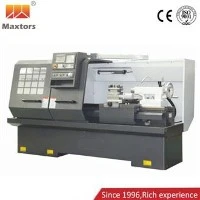
Milling machine: It is a machine tool that uses a milling cutter to mill a workpiece. In addition to milling flats, grooves, gear teeth, threads and splined shafts, milling machines can also machine more complex contours. Efficiency is higher than planer. Widely used in machinery manufacturing and maintenance departments. Planer: A linear motion machine tool that uses a planer to plan the plane, groove or formed surface of a workpiece. Using planer processing, the tool is relatively simple, but the productivity is low (except for processing long and narrow planes), so it is mainly used in single-piece, small-batch production and machine repair workshops, and is often replaced by milling machines in mass production. According to the structure and performance, planers are mainly divided into planers, gantry planers, single-arm planers and special planers (such as planers for planing the edges of large steel plates, planer punches and planers for complex-shaped workpieces).
The bullhead planer is named for the shape of the ram and the knife holder like a bullhead. The planer is installed on the ram tool holder for longitudinal reciprocating motion, and is mostly used for cutting various planes and grooves. The gantry planer gets its name from the gantry frame structure composed of top beams and columns. The worktable carries the workpiece and makes linear reciprocating motion through the gantry frame. It is mostly used for processing large planes (especially long and narrow planes). For machining grooves or machining several small and medium-sized parts at the same time. Large gantry planers are often equipped with milling heads, grinding heads and other components, which can plan, mill, and surface grind the workpiece with one installation. Single-arm planers have a single column and cantilever. The worktable reciprocates longitudinally along the guide rail of the bed. It is mostly used for processing workpieces with a large width and does not require full-width processing.
The tool or workpiece makes reciprocating linear motion, and the workpiece and tool make intermittent feed motion perpendicular to the main motion. Commonly used planers are: bullhead planer, gantry planer and single-arm planer.
As an AI language model, I do not have personal opinions, beliefs or preferences. However, I can provide a comparison between a milling machine and a planer.
Milling machine and planer are both cutting tools commonly used in metalworking and woodworking applications. While both tools are primarily used for machining operations, they have significant differences in their functionality, design, and the type of work they can perform.
1. Design and function
Milling machines are designed to remove material from a workpiece using the rotary cutters attached to the spindle. The spindle rotates the cutter, and the workpiece moves along the bed, allowing the cutter to create the desired shape or design.
Planers, on the other hand, have a stationary cutterhead that moves back and forth, cutting the workpiece. Workpieces of various lengths and materials can be fed horizontally to the planer motor. Planers are often used for coarse removal of material, flattening large surfaces, and squaring off the edges.
2. Cutting operations
Due to the nature of their design, milling machines can perform a wide range of cutting operations, such as drilling, contouring, and forming. These versatile machines can also be used to create irregular shapes or intricate patterns on the workpiece.
Planers, on the other hand, are primarily used for shaping flat surfaces, smoothing rough surfaces, and creating perfectly flat and parallel surfaces.
3. Workpiece types
Milling machines can work with a wide range of materials, including metal, wood, plastics, and composites. The machines can handle various sizes and shapes of workpieces, from tiny electronic components to large airplane parts.
Planers are primarily used for wooden workpieces, particularly boards and planks. However, they may be used on metal workpieces in certain cases.
Therefore, a milling machine offers greater versatility and precision when it comes to operations and workpiece materials, whereas a planer is typically a better option for rough removal of material and creating flat surfaces.